by Andy Davis

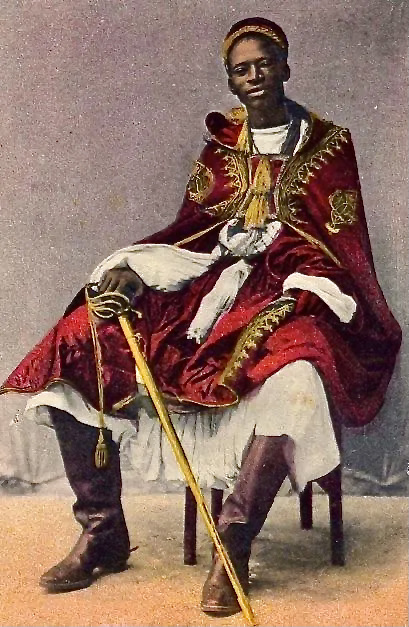
28 June 1914. My Sun opens its eyes to look upon the earth as West Africa passes under the fireball. A little piece of flame no bigger than a egg, snaps free from a flare and hurtles earthward at an impossible speed. Piercing waveless into the earth’s atmosphere. The little flame falls like a raindrop through thick cumulus clouds and lands in the mud on the shore of Lac de Guiers in Senegal. The little flame burns intensely next to a bask of large Nile Crocodiles calefacient in the Sun. Startled, the crocodiles crawl into the water. The little flame jumps on a croc instantly setting the entire reptile a blaze as it calmly slips beneath the waves. Fire still blazing under the water as croc swims deeper. Inland is the ancient city of Yang-Yang. A city older than the 1000-year reign of the Sine Empire. From the time of The stranger from the lake to first contact. Life has remained unchanged in Sine. Once a golden Empire the Sine Kingdom here and now lay conquered in the Sine wars, by the French, just 47 years ago. The pain of defeat is still fresh in the minds of the Sine people. Only habit remains to help the people overcome their pain. Tradition dictates the King’s palace be located at the centre of the kingdom. The Baol palace, the most splendid of all, was burned to the ground by the King himself. The pain of losing Baol to the French was too great. Better Baol burn by the King, than seized by the French. Yang-Yang is My King’s ancestral house and my home. I Jogo Siga Joof, 26 yo heir to the Sine Kingdom, compose a photograph of my father, King of Sine Jogo Gnilane Joof, seated next to Postmaster General Mr. Blaise Diagne. The first African to be elected, just 3 months ago, to the Chambers of Deputies of France and sit as the member from Senegal. The always impeccably dressed Mr. Diagne, named Postmaster General, expertly performs his complicated duties. Mr. Diagne famously proclaimed, The post must get through, as prelude to French intentions to create a network of post offices across Senegal, linked to France, America and the Orient. Yang-Yang will be Post office no. 3. As Postman, Mr. Diagne bears a large well travelled crate addressed to me. Opened inside is a Kodak Brownie camera, tripod, Snapshot Roll Film and all the techniques for a halftone printing process. A process that enables photos to be reproduced in any publication worldwide. A process only theory in photography school at King’s University in Morocco. Here and now theory becomes a material force. I discovered photography at Kings and knew then my purpose. I read everything about photography. Became showman making my own Camera Obscura, entertaining the courtiers. The theme emerges, The world is changing, so must our roles. Mr. Diagne a common stock African sits in the chambers of the deputies of France. A role unimaginable until a short time ago. In the here and now Yang-Yang house is to become a post office, no. 1. An auspicious event for Mr. Diagne, as he takes possession of a fine building. A bitter occasion for the King of Sine. My King must quiet the mind of the Sine people by performing a blessing ceremony upon the new French institution. No easy duty for all the Sine people must attend. He must Bank his gold, pay tax and guard all that remains of his wealth the gold in the keep. The true source of my Kings wealth, the gold mines of the Sine Kingdom, were annexed by France. Awarding limitless intrinsic value to the French cause. My camera, a mere consolation gift to dull the sting from the French. Behind the King and Mr. Diagne, courtiers and an adjutant ready themselves for the photograph. Looking into the eyepiece of the Kodak Brownie camera. A light burst appears in the lens. I blink and open my eye to see a massive Nile crocodile crawl into the room, startling proceedings. Croc whips its tail right, Snap! And stops people from running to the door. Croc pulls its tail and whips back around. Snatches the King of Sine in its teeth, tosses him up, catching him head first in its jaws, and eats him whole. Master of the room, crocodile stands on its tail like a cobra, arms and legs dangling from its belly, and poses for the camera. I blink. The crocodile’s head tilts down and its eyes look into mine. I blink. In team the Crocs tail shrinks into the torso; forelegs stretch into shoulders and pluck into arms, claws grow into human hands. Croc’s hind legs reach the ground stand on Croc claws that grow into human feet. Finally, a crocodile’s head rests on the body of a man poses. I look up. The people look ready. I look back into the eyepiece and take the picture.

For France!🇫🇷
By Andy Davis
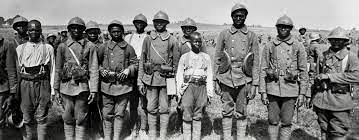
4 November 1914 Diksmuide Belgium. I, Jogo Siga Joof of Sine, am honoured to be a Tirailleurs Senegalese. A brigade of 5000 sons of Sine ready to fight. The best men of Sine told by their perfect teeth. Stand ready to kill for Belgium. Uniform in the colours of the French flag; Gmelin’s blue jacket and pants; St. Denis red toque with sash; Joan of Arc white puttee-wrapped calves; well-fitted brown leather boots; carrying new Meunier A6 rifles fixed with razor sharp bayonets. Like toy soldiers ready to kill. Launched from blooded Morocco on an ocean voyage to Belgium, just a fortnight ago. Marched 20 kilometres straight onto a battlefield in Diksmuide, Belgium. To meet our purpose. The Tirailleurs Senegalese are the vanguard of an armed attack by the army of the French 3rd Republic on the army of the German Empire. A ceremonial honour in truth for we are all about to enter the afterlife. Our CO Captain Henri Chabot blows his whistle. The ear-piercing blast alerts a cry! FOR FRANCE!🇫🇷 The Tirailleurs quickly form a chain of Walking Fire. Within a stone’s throw of the enemy lob grenades and advance. Inside enemy lines, bayonets and training is the weapon of choice in a fight to the death. Surrender is no option for the Tirailleurs Senegalese. Germans simply kill Sine soldiers upon capture. Germans believe the Sine people are savages. Therefore regular rules of war don’t apply. A shell lands in front of me. The blast throws me back. A piece of hot shrapnel slots itself in my right shoulder. Instinctively I rip open my tunic. Reach into the wound and pull a hot piece of metal the size of a thumbnail out of my chest. The wound oozes blood. I tear my sash and stuff the wound with the red sash and collapse, exhausted. The red sash grows blood red. I look up into a smoke-filled sky and see an aeroplane fly overhead. A shells explodes well to my right. A second explodes near to my right. A third flies overhead. Boom! Then silence. I pass into the afterlife. I walk on the surface of the Sun unharmed and know I am creation itself. My eyes open upon the earth. France ordered the entire Senegalese brigade onto the battlefield in keeping with the war tradition. The Germans wait for ribbons of red, white and blue uniforms to reach across the battlefield before opening fire. The artillery barrage lasted 20 minutes. in the aftermath 3800 men of Sine lay blown to pieces on the battlefield. Belgian soil soaked in Senegalese blood. Tirailleur defeated a German machine gun position at one point in the battle. It sent the bullet killing the machine gunner instantly. The bullet belt feeder grabbed the machine gun handle, he too is struck and killed instantly. Tirailleurs captured an enemy machine gun nest, but command ordered a withdrawal. Tirailleurs Senegalese capturing a German Machine Gun position is not part of the plan. Only ritual death. A blood offering to Aries, the god of war. Tirailleurs Senegalese brigade sacrifice is a prayer before dying for victory in battle. The glory of victory belongs to the French metropolitan soldier. The Sine soldier must find his glory in Sine. Then I awake in a military hospital and survived my injury. I knew I will survive this war. Inherent the Sine crown and restore the glory of the Sine Kingdom.

At Night All Blood Is Black by David Diop. Intelligent book. Well written. Good WW1 soldiers story. Eye opening piece.
— Andy Davis
A Letter to My King
By Andy Davis

14 April 1915. South of France. I Jogo Siga Joof heir to King King of Sine Jogo Gnilane Joof of Sine. My King, as these are the first words we have exchanged since I announced my enlistment. I’m forever ashamed of my behaviour. I ask your forgiveness. I will speak to the point. I can only imagine what my King thinks of me. Your son and heir a soldier in the French army, betrays the King. The same French army that defeated the army of the Sine and burned my King’s palace to the ground in living memory. Means the French have total victory over the Sine King. None of which is of my choosing. Is it right I am condemned for things that are beyond my control?
After the 1st Dahomean war, just 25 years ago, a defeated Empire. Withered, Jolof is Romanized into a French colony. Leaving the Jolof King a mere figurehead.
Away from the war France is quite beautiful, but in a different way from Wolof. Except to say it has forests, farms, villages and cities as we do. In every direction beautiful villages separated by farmland. I’ve seen no wilderness here, but it’s no less dangerous. The French are a romanized culture and know what it is to be transformed. I have seenAlthough the war remains close. The warmth of the sun puts me in the mind of home and you Khady. The French countryside is quite beautiful away from the battlefields. I wish to share it with you after the war. It can only be described as matched to the beauty of your smile. I’m a corporal and interpreter in the Tirailleurs. The men know I am heir to the King and treat me as such.
As of the writing of this letter Lieutenant Chabot our commanding officer knows. He’s surprised to learn I can read and write or that the Tirailleurs soldiers have a full life back in Africa. To him Africans are trained animals incapable of thought or emotion. Letters from soldiers such as us is an attack on cherished beliefs and deeply upsetting. The Tirailleurs he sent to die are men
Today camp life feels very much like day to day life in Wolof, except we are not allowed to mingle with the French. It can be frustrating because the French are everywhere and the Tirailleurs are a curiosity. The French want to touch us to see if we’re real and not a dream. We have to let them. We don’t want the French frightened of us or risk becoming the enemy within.
We have been equipped surprisingly well with weapons and training. We adorn khaki coloured woollen uniforms that looks quit handsome on us. Khaki is a brown/green colouring that makes for excellent camouflage. While the woollens have proven to be warm wet or dry and offers considerable protection against the cold European winters. Our boots are made of leather and provide excellent foot protection. We are bivouacked at a farm outside a nearby town. We sleep in tents most nights and wear blankets at sleep for warmth. We are feed well, but not as regularly as I’m accustomed.
The winter is unlike anything I’ve ever lived. It becomes so cold. The plants shrink into the ground to hide from the cold and grow back when the weather warms. It now occurred to me. Weather in Wolof changes from warm to hot throughout the year as a matter of course. In France weather swings from cold to hot and back again producing snow or crystallized rain and rain between. The cold will be beyond imagination. Today is warm and sunny.
in this war because I am schooled in French and Photography at the University of Algiers. As told this war in European is a white mans war, yet here I am. A war waged on in chapters since before the time of our Lord 1950 years ago. The tribes of Europe, the Gaul, Germania, Britons, Gallic, Iberian, Thracian war with Rome. The Gauls Romanized, Germania was not. An unstoppable spear meet unbreakable shield a paradox. Where the tip meets the spear. Crackles the realm of combined contradictions I inhabit. I know these words might mean nothing more than words on a page, but at least you can read my words and know they are mine. Perhaps read them to my father. He will understand.
The war has dulled my senses. You must learn to pace your emotions as a soldier. I saw it first in Morocco what can happen if you don’t. A soldier grieved uncontrolled after the sudden and violent death of his friend. He was never the same man after that. Too much grief can drain you of your identity. Leaving nothing but a brittle shell of a man easily cracked so I don’t grieve.
Physically I’m relatively unharmed but I struggle to remember my life before the war. 9 months seems a lifetime ago. I studied photography married and practiced the arts of a King warrior magician lover. I must practice my discipline or I lose touch.
Calculus of Gold

The royal dynasties of Europe have grown idle rich upon my Kings gold. Drunk with power they embarked on a giant spending carnival war. Increasing the desire for gold in the meantime. In Woloff gold is life itself. A slave must dig gold out of the ground with his bare hands and give it to you. A complicated social hierarchy 1000’s of years old. The French annexed the gold keep and the slaves that belonged to it. Ending a Woloff way of life forever. It’s believed. The slaves that dig for gold belonged to France from first contact in 1892 with Colonel Dodds arrival on horseback until 28 July 1914 the beginning of the war. I have the ways and means to recoup My fathers gold. In that period France mined over 10 tons of gold metal from our Wolof keep. That right as King stolen from my father. Woloff has not been itself ever since. As heir I must do everything I can to restore my inheritance and return Wolof to prominence. I know its most improbable the entente or the alliance will share the location of the gold keep with a chocolate soldier but they have. General Mangin in an attempt to instil confidence in the heart of the Senegalese Riflemen said each one of us is worth his weight in gold to France. It implies Senegalese Riflemen are elemental to the war effort but he means African soldiers lives instead of French soldiers lives. I think elemental is a sensible belief. French gold is wolof gold. No question a soldier is worth his weight in gold. I estimate the average soldier weighs 73 kg @ .29 g of pure gold/1 franc) is worth 251,724.14 francs a small fortune. 10 tons of pure gold @ .29g/Franc is worth 34,482758.62 francs a tidy fortune. 137 enemy soldier worth their weight in gold is equal to my inheritance.
The Royal Couple

Spring 1913. I see no time just colour. Franz Joseph I Emperor of Austria-King of Hungary commands Archduke Franz Ferdinand to inspect the Imperial guard garrison at Sarajevo, Bosnia and Herzegovina. The seat of tension between the Empire-Kingdom of Austria-Hungary and the Kingdom of Serbia. On 28 June 1914 Archduke Franz Ferdinand inspected the guard at Sarajevo in his full military capacity as Major General. The Archduke lead a party included his wife Duchess Sophie Maria. A rare opportunity to include his lovely wife Duchess Sophie Maria on official duty. To show pride in their unblessed marriage. An opening of a new museum commissioned by the crown in nearby Sarajevo is a delightful setting.
Historian A. J. P. Taylor observes:
[Sophie] could never share [Franz Ferdinand’s] rank … could never share his splendours, could never even sit by his side on any public occasion. There was one loophole … his wife could enjoy the recognition of his rank when he was acting in a military capacity. Hence, he decided, in 1914, to inspect the army in Bosnia. There, at its capital Sarajevo, the Archduke and his wife could ride in an open carriage side by side … Thus, for love, did the Archduke go to his death.
28 June 1914 Sarajevo, Bosnia and Herzegovina. A motorcade drives with authority through modern Sarajevo carrying the royal couple. To the hospital where the Imperial guards injured in the bomb blast of the assassination attempt on the Royals were taken. The Royal car turns right and comes to an abrupt stop. The driver reverses the vehicle disrupting traffic and causing a commotion. A young man armed with a pistol steps off the sidewalk. Standing next to the vehicle carrying the Royal couple. The man points his pistol at the Royal couple closes his eyes and fires two shots. The first bullet strikes the Duchess in the stomach. The second strikes the Archduke in the neck, severing his jugular artery. The Royal couple are shot to death by 19-year-old Gavrilo Princip. A political agitator affiliated with the Black Hand. A Serbian backed secret military society formed in 1901 by officers in the Army of the Kingdom of Serbia to purge eastern Europe of Austrians. Gavrilo Princip missed his first chance but as fate would have it he is given a second opportunity. Incredibly Archduke Franz Ferdinand and wife Duchess of Hohenberg Sophie Maria are defenceless targets 2 meters from Gavrilo standing on the sidewalk. Princip breaths and steps off the sidewalk…
The motorcade speeds along an unplanned route to the hospital with the bodies of the Royal couple in tow. Guided by The Archduke insistence and accompanied by his wife Duchess Sophie. The Royal couple narrowly escape an assassin’s bomb exploding under the vehicle following the Royal couples car. Hospitalizing a few Imperial Guard. On route to the hospital the Royal car makes a wrong turn and stops in a medieval corner of Sarajevo. The Faces in the crowd recognized the Royal couple. Dressed in their finery. The Royal caravan sticks out like a sore thumb. A man with dark circles around his eyes steps forward. In the silence of her mind, Sophie sees a small patch of burning flame on the ground. Curious, she thinks, how small and perfect that light is. Small like an egg, marvellous. Standing next to the car Gavrilo Princip points his pistol and fires two shots. Blam! Blam! Flame bursts from the muzzle as bullets instantly drilling into the Royal couple.
First Duchess Sophie Maria 46 is hit in the chest. Archduke Franz Ferdinand, 50 is hit in the throat. The Royal couple are dead within mins of each other. They are survived by 4 children. All are ineligible to inherit the throne. Franz Joseph I Emperor of Austria-King of Hungary died in 1916 at 86 ending the Hapsburg reign. The Emperor-King Karl Franz I Emperor of Austria, King of Hungary, King of Croatia, and King of Bohemia inherits the throne. Duchess Sophie’s death is a footnote in the story of WW1. The Duchess Sophie was a commoner and a woman. Her death didn’t hold as much significance as her husband. Sophie was the braid connecting common tradition of old with the monarchy. As the first casualty of the war her death severed the braid. Monarchy is cut free from tradition. With nothing to cauterize the wound the monarchy and tradition bleed to death. Silencing the voices of the ancestors forever.
A WW1 Timeline
28 July 1914
Austria-Hungary Empire declares war on the Kingdom of Serbia. As treatied Russia allies with Serbia. Imperial Germany allies with Austria-Hungary and the Kingdom of Italy to form a Triple Alliance. German Generals have a military plan to revanche Alsace Lorraine territory lost to France as of the Franco-Prussian war.
1 August 1914 Imperial Germany declares war on the Russian Empire. The German army has a plan to win the war. The Schlieffen Plan is a battle plan first proposed in 1905 by Count Alfred von Schlieffen chief of the German general staff. The Germany army would wage a successful two front war against Russia in the east and France in the west. The plan called for the German army to invade northern France through Belgium. At lightening speed catching both the French and Russian armies unprepared. Swoop in around Paris from the west and revanche, an aim at reclaiming lost territories, Alsace and Lorraine from the south.
3 August 1914 Imperial Germany declares war on the French Third Republic.
The German Army open hostilities invading Luxembourg and Belgium. The German army is considered the best army in the world. Typically German military operations are well planned and executed, until it meets a worthy opponent. First the Belgian army at Liege, Belgium, next at the Marne river. The French army stopped the German advance at the Battle of the Marne, a river 30 km north of Paris. Then the combatants race to the sea ending in Belgium at Newport. Afterwards both sides dug in along a meandering line of fortified trenches that changed little except for battles in early 1916 and in 1918. Black soldiers served on the Western Front from the very beginning. 5 Senegalese Tirailleurs battalions served with distinction at Ypres and Dixmude as part of the Battle of Flanders in late 1914; at the capture of Fort Douaumont in October 1916, at the battle of Chemin des Dames in April 1917 and at the Battle of Reims in 1918. Millions of men were all schooled as soldiers in the very same way and categorized by race.
“Casualty figures of French African troops deployed in Europe found in official reports, unofficial accounts and in the historiography estimate 65,000 black Africans killed, 100,000 Algerians 9,000 Moroccans 4,000 Malagasies.
4 August 1914 UK declares war on Imperial Germany. WW1 begins. The German army was the best operational army for war, but the UK Government had centuries old war pedigree. Detailed in a UK government war book detailing the preparation necessary to carry out successful military operations. A prime example: the royal navy functioned as a machine able to project British power across the globe because it controlled a vast hinterland of men, factories necessary to produce ships for the Admiralty on command. The war book compiled by the British war office wisdom gathered from past wars. Which consider in advance the campaigns that must be undertaken should war arise with one or more opponent to ensure a path to victory.
5 August 1914, the first battle of WW1.
“At the Battle of Liege, Belgium, 5 – 17 August 1914, the Germans open hostilities by invading Luxembourg and Belgium. A Belgian army 200,000 strong stop a German field army of 320,000 troops at the medieval town of Liege. The Belgians stalled the German invasion at Liege, 12 days. Giving valuable time for the BEF to land in France.
7 August 1914 The British Expeditionary Force (BEF) lands in France. The BEF first meet the Imperial German army at the Battle of Mons on 24 August 1914 as part of the greater Battle of the Frontiers. Although just 247,000 men. The BEF are all seasoned professional volunteers.
The Battle of the Frontiers begins 7 August to 6 September 1914. Opposing forces French and German collide across the eastern borders of France and southern Belgium. A costly series of pitch battles take place. In the span of a month the death toll is staggering: France, 329,000 killed. Germany, 305,000 killed, UK 29,000 killed. Unbowed military Generals take command of the war and press on. The Generals men of the moment concluded.. Great strides in perfecting deadlier military weaponry have been made. Weapons of the imagination that kill with precision and in great numbers. Although lightly tested still capable of slaughter and pose as a deterrent.. Any enemy will avoid confrontation rather than risk certain annihilation. Slaughter will ultimately bring about a speedy end to war the Generals concluded. Meanwhile politicians were men of the time. At the time falling in line politicians mobilized countries for war.
5 September 1914
A. Soldier.
5 September 1914 Bouna N’Diaye is awarded a military commission in the 1st Senegalese marching regiment. He is 36.
Born: b. 1878, Yang-Yang, Senegal, d. 28 July 1952 in Louga, Senegal.
NATIONALITY: Senegal 🇸🇳
ALLEGENCE: France 🇫🇷
SERVICE/BRANCH: Senegalese Tirailleurs, 5 September 1914-1918
RANK: Adjunct Interpreter
UNIT: 1st Senegalese Infantry Regiment
BATTLES/WARS: Battle of Flanders at Ypres • Dixmude in late 1914 • Fort de Douaumont 1916 • Chemin des Dames 1917 • Battle of Reims 1918
AWARDS: 1918 Croix de guerre (1914-1918)
CITATION:
At the start of the Great War, Bouna N’Diaye volunteered to fight in the French army. Eager to demonstrate his allegiance to France. On August 30, 1914 N’Diaye started a monthly subscription at government house: “I, the undersigned Bouna N’Diaye, ruler of Djolof, declare to authorize the receiver regional district of Louga circle to withdraw monthly from my pay a sum of one hundred francs for the benefit of the French wounded of the war. I declare that this levy should not be stopped until three months after the complete cessation of the war in Europe. Signed on 30 August 1914 in Yang Yang Senegal.
Raison d’etre:
The last King of Djolof a former kingdom in what is now Senegal. Enthroned in 1895 Bouna Alboury N’Diaye is a direct descendent of the legend Ndyadyane Ndyaye. Sits upon a 600 year old throne. Sovereign owns gold fields holding billions of francs in raw gold and thousands of artisanal miners. A legacy stolen by France in a violent coup against the former King, his father. In an act of apocalypse now. The King burned his royal city, including the library, before the French got to it. Djolof is reset as Senegal. Where there is no gold. There is no more kingdom for the last king. Only story and legend are left to tell. The last king Djolof must measure his value against his deeds.
The Legend:
“The story of Ndyadyane Ndyaye begins with a dispute over wood by a prominent lake. This led to bloodshed among the rulers but was stopped by the mysterious appearance of a stranger from the lake. The stranger divided the wood fairly and disappeared, leaving the people in awe. The people then feigned a second dispute and kidnapped the stranger when he returned. They offered him the kingdom and convinced him to become human through marriage to a beautiful “Takrur” woman. N’Dyadya N’Dyaye is descended from this union. When these events were reported to the ruler of the Sine, also a great magician, he is reported to have exclaimed in amazement “Ndiadiane Ndiaye” in his native Serer language. The ruler of the Kingdom of Sine (Maad a Sinig Maysa Wali) then proclaimed all rulers between the Senegal River and the Gambia River voluntarily submit to this man, which they did.”
24 May 1890, a stranger arrives. Colonel Dodds and his French cavalry army emerge out of the forest. Following a policy of annexation the French coup the King’s gold mine and slave operation. Ending a centuries old praxis.
The story goes, A stranger arrives on horseback and kills the under King. After the under King sets fire to his city, Yang-Yang, the capital of Djolof. He would rather see Yang Yang burn than turn it over to France. It was the end of the old Djolof empire. The people were left in awe.
Alfred Amédée Dodds,
Born: b. 6 February 1842 Saint Louis, Senegal – d. 17 July 1922 Paris, France.
Nationality: Senegal 🇸🇳
Allegiance: France 🇫🇷
Service/Branch: French Army
Rank: Division General
Unit:
Wars/Battles: Franco-German War of 1870 Franco-Chinese War Second Dahomey War
Awards: Grand Cross of the Legion of Honour
Citation: In 1935, the General-Dodds avenue is named in the 12 th arrondissement of Paris, near the museum of the colonies.
Raison D’ETRE:
Senior commander of the French troops in Senegal from 1890 , he led the conquest of Dahomey (now Benin ) between 1892 and 1894 , deposing King Béhanzin . Close to the French radicals, Alfred Dodds owed his appointment as expedition leader to the personal intervention of Clemenceau , an appointment which led to the resignation of the Minister of the Navy Godefroy Cavaignac
In Dahomey, Dodds took the royal city of Abomey, capital of the kingdom of Dahomey on November 17, 1892, deposed King Behanzin, frees his slaves and allows the rebirth of kingdoms submitted by Dahomey (Kétou …), and puts an end to human sacrifices. Placed the kingdom of Dahomey under French protectorat. He was appointed brigadier general on November 9 , 1892, after the capture of the holy city of Cana (or Kana).
As both a quadroon and Métis, Dodds was famed in the African diaspora at the beginning of the 20th century as an example of African leadership. From 1892 to 1894, he led the conquest of Dahomey, one of West Africa’s most powerful pre-colonial states, against King Béhanzin.
Alfred Amédée Dodds died at his home in Paris, 1922. He was 80.
As king of Djolof Bouna Ndiaye, inhabits the fullness of a King. N’Diaye is the centre of the Djolof empire. It radiates from him. His confidence, purpose, and well-being give him supreme balance. Even when the world around him is in chaos. Bouna N’Diaye remains cool, calm, and collected. He is: decisive; lives with integrity; protects the realm; provides order; inspires creativity in others; blesses the lives of others and leaves a legacy.
In the privacy of Bouna’s mind. He hears the voices of his fathers speak, “fulfill your role as king”, but the voices of Bouna’s ancestors fall silent, regarding the French. His fathers tell stories about a stranger arriving on horseback in his native language. Colonel Dodds, comes in the name of France. The fathers don’t speak french. French takes possession of the fathers language and French speak of war. It’s 1914 and France is in a life or death struggle with Germany! France needs men like you to fight for France! Bouna N’Diaye’s ancestors never heard of such a thing and neither had he. Finally it had come to pass. The moment Bouna N’Diaye must decide for himself without the voices of his fathers in the privacy of his mind. Bouna remembers the mysterious stranger from the lake, sent to end conflict. Bouna decides, France is noble enough to die for”. Bouna fought for France, because he had to!
France asked Bouna to climb out of a cleve in the earth, with a machete in one hand and a rifle in the other. At the vanguard of an assault on the German enemy. Bouna fights savagely in the trenches, shooting, stabbing, chopping, killing, spilling mens, or “white” mens blood and became very good at it. In every attack carried out by the French Army during in WW1 the Senegalese Tirailleurs were there. Bouna did what he had to do and remained cool, calm and collected, most of the time. There were moments when Bouna lost his collect. He recalled thinking, “France calls me a Tirailleurs Senegalese, but what they really mean is I’m a paid savage. I’m Bouna N’Diaye king of Jolof”, not a savage. “The French think of me as something I am not”. A shell blast knocks Bouna unconscious. Bouna’s spirit body leaves his physical body and for a time Bouna can observed himself lying in a pit of dead and dying Tirailleurs. Then he is back in his body and awake.






 Jon Cake Film